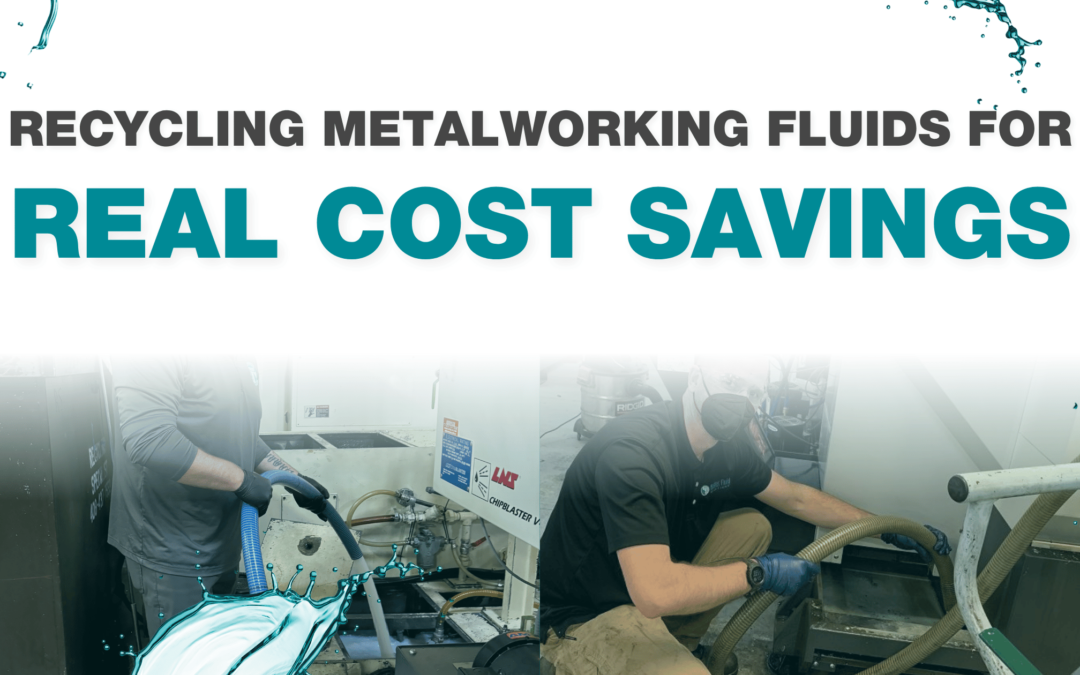
Most shops feel the cost of coolant from the moment they buy it to the moment they haul it away. Purchasing, managing, and disposing of fluids can quietly drain resources without anyone realizing how much money is being lost. For many operations, disposal feels routine and unavoidable.
Recycling metalworking fluids disrupts that cycle. When coolant is cleaned and kept in service instead of being dumped, shops see longer fluid life, lower purchase volumes, fewer machine interruptions, and major improvements to the work environment. These gains ripple through labor, tooling, and productivity in ways that often surprise manufacturers.
Master Fluid Solutions has supported this type of coolant optimization for more than fifty years.
What is metalworking fluid recycling?
Recycling metalworking fluids means cleaning and restoring coolant so it can stay in service far longer than traditional dump and recharge intervals.
A strong recycling program includes:
- Stable, long-life fluids designed to resist breakdown
- Systems that remove tramp oil, chips, and fine contaminants
- Filtration or separation that restores usable coolant condition
- Consistent monitoring of concentration, pH, and microbiology
Master Fluid Solutions began advancing fluid cleaning and reclamation concepts in the early 1970s. Those early efforts shaped many of the principles still used today across the industry.
Why do many shops still dispose instead of recycle?
Disposal feels familiar and predictable, which is why many plants still rely on it even when better options exist. Common concerns include:
- The belief that recycling requires major infrastructure
- Concerns about upfront equipment costs
- The perception that coolant is a small line item
- Past frustrations with inconsistent coolant management
These concerns are valid for teams who have only experienced basic skimming or occasional tank cleanouts.
A good recycling program is not just a piece of equipment. It is the combination of strong chemistry, disciplined processes, and expert support that lowers the total cost of ownership and removes burden from the production floor.
Master Fluid Solutions positions itself as a coolant management company for this reason. Our team conducts plant surveys, lab analysis, product selection, and hands-on training to help every gallon of coolant stay productive.
Where do wasted coolant costs really come from?
Coolant may look like a small expense on paper, but indirect costs often paint a different picture.
1. Concentrate purchases
Dumping coolant early wastes usable chemistry. Recycling and proper maintenance can extend fluid life 2-5x and reduce concentrate purchases dramatically.
2. Waste disposal and compliance
Disposal fees increase with volume, and regulatory requirements add responsibility. Better coolant conditions reduce the amount of waste a plant generates.
3. Labor and downtime
Dump and recharge cycles require:
- Scheduling downtime
- Pumping and cleaning the sump
- Refilling and reconditioning the machine
High-utilization machines lose valuable hours during these cycles. Improved coolant care reduces emergency cleanouts and unplanned downtime.
4. Tool life and part quality
Degraded coolant weakens lubricity and cooling. Tools wear faster, and scrap rates increase. Optimized coolant programs have improved both tool life and consistency in demanding applications.
5. Work environment and retention
Odor, bacteria, and residue affect morale and air quality. Structured recycling programs have eliminated odors and improved cleanliness in both shops and adjoining office areas.
Recycling reduces costs in all five categories at the same time.
How does a recycling system work?
Although every plant is different, effective recycling efforts share four core elements.
1. Stable, recycle-ready fluids
Long-life emulsions and semi-synthetics that resist bacteria, reduce foam, and shed tramp oil produce the strongest results. TRIM® and MicroSol® fluids are formulated with these qualities and have proven performance across aerospace, automotive, and general machining.
2. Recycling and cleaning equipment
Recycling involves more than simple skimming. Effective setups usually include:
- Portable or central cleaning units
- Separation equipment for tramp oil and particulates
- Coalescers and filters for solids and free oils
- Proper mixing systems to return coolant at the correct concentration
These technologies come in many configurations, making them practical for both small shops and large plants.
3. Measurement and control
A recycling program works when coolant conditions are monitored consistently. Key checks include:
- Concentration
- pH and alkalinity trends
- Bacteria levels
- Tramp oil and foam behavior
Master Fluid Solutions supports teams with lab testing, onsite evaluations, and ongoing guidance.
4. People and procedures
Clear routines keep recycling effective and sustainable. High performing shops:
- Standardize sampling and topping up
- Train operators on coolant condition indicators
- Assign ownership to ensure consistency
Master Fluid Solutions provides training and operator support to reinforce these practices.
How recycling creates measurable savings
Once recycling is in place, savings show up across the entire operation.
Lower fluid purchases
Coolant stays productive longer, which reduces concentrate use and flattens purchasing cycles.
Reduced disposal volume
Cleaner fluid means smaller waste streams and fewer disposal-related costs.
Less downtime
Extended sump life means fewer machine stoppages and more productive spindle hours.
Better tool life and part consistency
Coolant that is clean and stable supports consistent machining conditions and improved tool performance.
A healthier workplace
Recycling reduces odor, bacteria, and residue, creating a cleaner and more comfortable environment for operators.
Practical steps to begin recycling
A full plant rollout is not the first step. A phased approach is more effective.
1. Start with a site assessment
A coolant specialist evaluates fluids, sump conditions, materials, disposal habits, and root causes of waste.
2. Analyze the hidden costs
Review twelve months of coolant spending, disposal invoices, and coolant-related downtime.
3. Launch a focused pilot
Select machines with similar operations. Use a stable fluid and introduce structured cleaning and recycling practices. Track sump life, waste volume, tool life, and uptime.
4. Build the business case
Pilot data makes it easier to project plant-wide savings and justify next steps.
Master Fluid Solutions helps customers document their progress and turn results into clear financial justifications.
How Master Fluid Solutions supports recycling efforts
Master Fluid Solutions provides expertise across the entire coolant lifecycle, including:
- Product selection aligned with recycling goals
- On-site process evaluations and plant surveys
- Lab analysis to guide decisions and track improvement
- Operator and maintenance training
- Ongoing reviews to maintain long-term savings and performance
This approach positions Master Fluid Solutions as a true partner in coolant management.
Ready to begin recycling?
If coolant waste, odor, or frequent cleanouts are affecting your productivity or budget, recycling may be a strong path forward.
Start here:
- Learn more about coolant management programs:
https://www.masterfluids.com/na/en-us/solutions/the-coolant-management-company.php - Schedule a conversation with a Master Fluid Solutions expert:
https://www2.masterfluids.com/FreeConsultation
Recycling metalworking fluids is more than an environmental improvement. It is a cost-saving strategy that helps manufacturers build cleaner, more productive, and more efficient operations.