Introduction
The real-world problem on the shop floor
Walk into a shop where coolant maintenance has slipped, and you notice it immediately. The air is heavy with sour odors. Operators complain about headaches, irritated skin, and breathing discomfort. Machines are running, but morale is not. Those odors are not just unpleasant. They are a warning sign that bacteria, tramp oil, and fine metal solids have taken hold in the system.
Left unchecked, these conditions quietly drain time and money. Operators lose focus or rotate off machines more often. Extra cleanouts are scheduled. Tool life drops. Scrap increases. What begins as a smell problem quickly becomes a productivity and cost problem.
Why this matters beyond the smell
Poor fluid health shortens sump life, increases disposal frequency, and drives up concentrate usage. It also creates an environment that puts operator health at risk, which can lead to absenteeism and higher turnover. Unmanaged contamination can accelerate bacterial growth and destabilize the coolant, which often leads to premature sump changeouts and higher operating costs.
Where Master Fluid Solutions comes from
Master Fluid Solutions was founded in 1951 by Clyde and Mary Sluhan with a simple but demanding idea. Manufacturing fluids should help people do their jobs better while wasting as little as possible. Clyde Sluhan was known for telling customers that he wanted to sell them as much fluid as they needed and not a drop more. That belief shaped the company from the start.
From the beginning, the focus was not just on chemistry, but on stewardship. Stewardship of resources, of machines, and of the people working around them. That mindset still drives how Master Fluid Solutions formulates, manufactures, and supports metalworking fluids today.
Company history and values are detailed here: https://www.masterfluids.com/na/en-us/history/index.php
What this article will cover
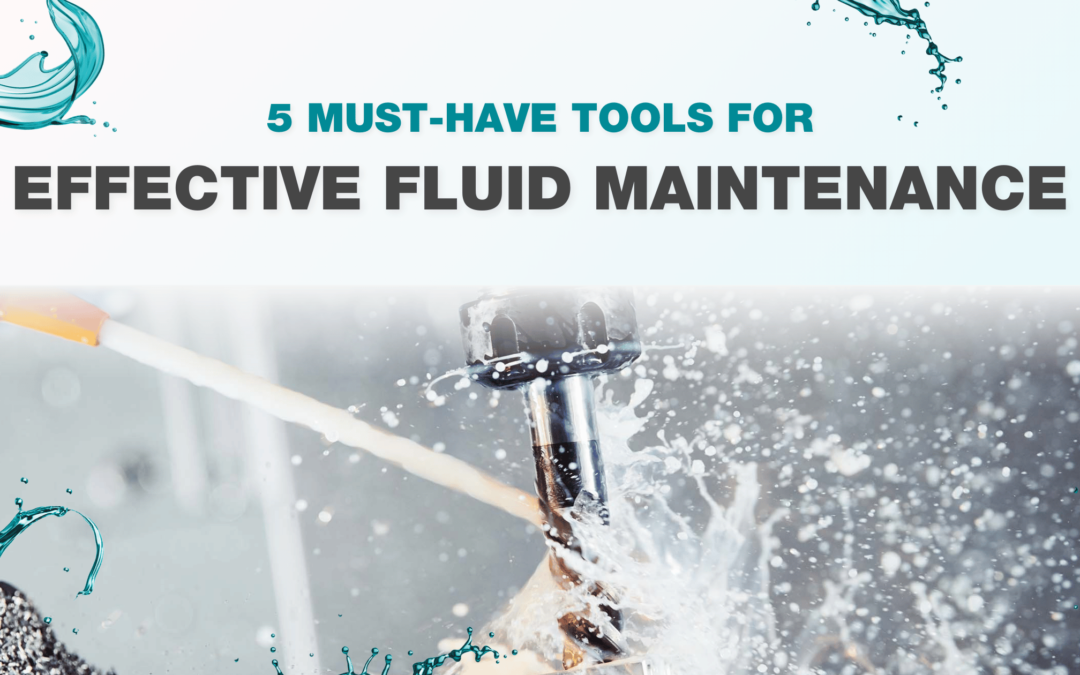
Effective fluid maintenance does not happen by accident. It requires the right tools, applied with purpose, to control contamination, stabilize concentration, and extend fluid life. In the sections ahead, we will walk through five essential tools that address the most common and costly fluid maintenance challenges found in machine shops. Each section explains why the issue matters, how the tool works, and what practical steps you can take to apply it in your own operation.
1. Managing solids before they manage your shop
Why solids accumulate and why they matter
Every cut generates chips, fines, and abrasive particles. Over time, these solids settle into the sump where they interfere with coolant flow, reduce heat transfer, and provide surfaces for bacteria to thrive. Fine solids can recirculate through pumps and nozzles, accelerating wear and clogging filters. As concentration drifts and fluid degrades, tool life shortens, and surface finish suffers.
The cost shows up in unplanned downtime, frequent cleanouts, and higher fluid replacement rates. Time that should be spent machining is spent cleaning.
The tool: Yellow Bellied Sump Sucker Lil’ Sucker
The Yellow Bellied Sump Sucker Lil’ Sucker is designed to remove settled solids and sludge from machine sumps quickly and effectively. By vacuuming heavy debris without fully draining the system, shops can clean sumps with minimal disruption to production.
Used correctly, a high-powered sump cleaner removes the material that destabilizes coolant and accelerates bacterial growth. This reduces the frequency of full coolant changeouts and extends usable fluid life.
Practical insights for sump cleaning
Best practices include targeting sumps during scheduled downtime, agitating settled areas before vacuuming, and removing solids before adding makeup coolant. Consistent use pays for itself by reducing labor hours, disposal costs, and lost production time.
Things you can do now for your shop:
- Identify machines with recurring sludge buildup
- Schedule periodic partial cleanouts instead of full drains
- Remove solids before adjusting concentration
- Document cleaning intervals to track improvement
2. Controlling tramp oil before bacteria take over
Why tramp oil is a serious problem
Tramp oil enters the coolant from way oil, hydraulic leaks, and spindle lubrication. Floating on the surface, it blocks oxygen transfer and creates ideal conditions for anaerobic bacteria. The result is foul odors, sticky residues, increased mist and smoke, and shortened coolant life.
These issues increase cleanup time, degrade operator comfort, and raise fluid replacement costs.
The tool: Scrounger belt skimmer
The Scrounger belt skimmer continuously removes floating tramp oil from the coolant surface. As the belt rotates through the sump, oil adheres to the belt and is scraped into a collection container, allowing clean coolant to return to circulation.
Continuous skimming reduces bacterial growth, minimizes mist, improves surface finish, and helps protect operator health.
Practical insights for tramp oil control
Position skimmers where oil naturally accumulates and run them consistently, not intermittently. Even shops without skimmers can take steps to reduce tramp oil impact.
Things you can do now for your shop:
- Inspect machines for hydraulic and way oil leaks
- Manually remove surface oil during daily checks
- Avoid over-lubrication
- Track odor changes after oil removal
3. Deep cleaning coolant to extend sump life
Why fine contamination persists
Even with solids removal and oil skimming, fine particles and emulsified oils remain suspended in the coolant. Over time, these contaminants degrade fluid chemistry and performance.
The tool: Tramp Oil Terminator disc-bowl centrifuge
Disc-bowl centrifuges, such as the Tramp Oil Terminator, use centrifugal force to separate fine solids and emulsified oils from coolant. This process restores fluid cleanliness without dumping the system.
By continuously polishing coolant, centrifuges significantly extend sump life and reduce disposal volume.
Practical insights before implementation
Consider coolant volume, flow rates, and space requirements. Pilot use on high-value systems often delivers quick returns.
Things you can do now for your shop:
- Measure total system volume
- Identify machines with chronic contamination
- Calculate disposal and replacement costs
- Compare against centrifuge operating time
4. Getting concentration right every time
Why concentration control matters
Water is mixed with coolant to manage heat, lubrication, and corrosion protection. Incorrect concentration leads to rust, foam, tool wear, and poor machining performance. It also wastes concentrate and increases downtime.
The tool: UNIMIX displacement proportioner
UNIMIX displacement proportioners accurately blend water and concentrate at the correct ratio every time. This eliminates guesswork and prevents overuse of coolant concentrate.
Practical guidance for implementation
Select a proportioner based on coolant type and required flow rate. Install close to the point of use and verify ratios during startup.
Things you can do now for concentration control:
- Confirm target concentration ranges
- Audit current mixing practices
- Standardize makeup procedures
- Train operators on verification checks
5. Recycling coolant to reduce waste and cost
Why recycling matters
Coolant recycling removes contaminants while preserving usable fluid. Without recycling, shops discard fluid that still has value, increasing disposal and replacement costs.
The tool: XYBEX® custom recycling systems
XYBEX® integrated recycling systems combine filtration, separation, and fluid conditioning to restore coolant for reuse across multiple machines.
Practical insights for system selection
System size should match shop volume and throughput. Plumbing loops and routine maintenance schedules are critical to long-term success.
Things you can do now before investing:
- Track monthly coolant disposal volume
- Map machines suitable for shared systems
- Review maintenance resources
- Define reuse goals
Conclusion
Bringing it all together
Each of these five tools addresses a specific failure point in fluid maintenance. Together, they protect people, reduce waste, and keep machines running productively. Effective fluid maintenance reflects respect for the craft of machining and for the people who do the work every day.
Take the next step
Assess your current fluid practices by reviewing sump cleanliness, tramp oil levels, concentration control, and disposal frequency. Master Fluid Solutions offers guidance, audits, and on-site support to help shops identify opportunities for improvement.
A shared belief
From its founding, Master Fluid Solutions has believed that manufacturing can improve lives when resources are used wisely and people are treated with respect. That belief continues today through partnerships that focus on safer, more productive, and more responsible operations.